A Celebration of Creative Crones
March Birthdays

(pictured from left to right)
March
5
Constance Fenimore Woolson (1840 - 1894), American writer
and poet
Lucy
Larcom (1824 -1893), American Poet
March
6
1944 ~ Kiri Te Kanawa, born in Gisborne, New Zealand, operatic soprano
1944 ~ Mary Wilson, born in Detroit, Michigan, vocalist, The Supremes
1944 ~ Kiri Te Kanawa, born in Gisborne, New Zealand, operatic soprano
1944 ~ Mary Wilson, born in Detroit, Michigan, vocalist, The Supremes
Constance
Fenimore Woolson (March 5,
1840 – January 24, 1894) was an American novelist and short story
writer. She was a grandniece of James Fenimore Cooper, and is best
known for fictions about the Great Lakes region, the American South,
and American expatriates in Europe.
In 1880 she met Henry James, and the relationship between the two writers has prompted much speculation by biographers, especially Lyndall Gordon in her 1998 book, A Private Life of Henry James. Woolson’s most famous story, Miss Grief, has been read as a fictionalization of their friendship, though she had not yet met James when she wrote it.
Woolson published her first novel Anne in 1880, followed by three others: East Angels (1886), Jupiter Lights (1889) and Horace Chase (1894). In 1883 she published the novella For the Major, a story of the postwar South that has become one of her most respected fictions. In the winter of 1889–1890 she traveled to Egypt and Greece, which resulted in a collection of travel sketches, Mentone, Cairo and Corfu (published posthumously in 1896).
“Theories are like scaffolding: they are not the house, but you cannot build the house without them.”
“Into the father's grave the daughter, sometimes a gray-haired woman, lays away forever the little pet names and memories which to all the rest of the world are but foolishness.”
I was at work that morning. Someone came riding like mad
Over the bridge and up the road—Farmer Rouf's little lad.
Bareback he rode; he had no hat; he hardly stopped to say,
"Morgan's men are coming, Frau, they're galloping on this way.
On like the wind they hurried, and Morgan rode in advance;
Bright were his eyes like live coals, as he gave me a sideways glance;
And I was just breathing freely, after my choking pain,
When the last one of the troopers suddenly drew his rein.
But, after the war was over, just think what came to pass—
A letter, sir; and the two were safe back in the old Bluegrass.
The lad had got across the border, riding Kentucky Belle;
And Kentuck she was thriving, and fat, and hearty, and well;
He cared for her, and kept her, nor touched her with whip or spur:
Ah! we've had many horses, but never a horse like her!
~ Constance Fenimore Woolson, Kentucky Belle
In 1880 she met Henry James, and the relationship between the two writers has prompted much speculation by biographers, especially Lyndall Gordon in her 1998 book, A Private Life of Henry James. Woolson’s most famous story, Miss Grief, has been read as a fictionalization of their friendship, though she had not yet met James when she wrote it.
Woolson published her first novel Anne in 1880, followed by three others: East Angels (1886), Jupiter Lights (1889) and Horace Chase (1894). In 1883 she published the novella For the Major, a story of the postwar South that has become one of her most respected fictions. In the winter of 1889–1890 she traveled to Egypt and Greece, which resulted in a collection of travel sketches, Mentone, Cairo and Corfu (published posthumously in 1896).
“Theories are like scaffolding: they are not the house, but you cannot build the house without them.”
“Into the father's grave the daughter, sometimes a gray-haired woman, lays away forever the little pet names and memories which to all the rest of the world are but foolishness.”
I was at work that morning. Someone came riding like mad
Over the bridge and up the road—Farmer Rouf's little lad.
Bareback he rode; he had no hat; he hardly stopped to say,
"Morgan's men are coming, Frau, they're galloping on this way.
On like the wind they hurried, and Morgan rode in advance;
Bright were his eyes like live coals, as he gave me a sideways glance;
And I was just breathing freely, after my choking pain,
When the last one of the troopers suddenly drew his rein.
But, after the war was over, just think what came to pass—
A letter, sir; and the two were safe back in the old Bluegrass.
The lad had got across the border, riding Kentucky Belle;
And Kentuck she was thriving, and fat, and hearty, and well;
He cared for her, and kept her, nor touched her with whip or spur:
Ah! we've had many horses, but never a horse like her!
~ Constance Fenimore Woolson, Kentucky Belle
Lucy
Larcom was born in Beverly,
Massachusetts, on March 5, 1824, the ninth of ten children. She left
Beverly in 1835 to work in the cotton mills in Lowell from the ages
of 11 to 21. As a mill girl she hoped to earn some extra money for
her family. While working in the mills, Lucy made a huge impact. She
wrote and published many of her songs, poems, and letters describing
her life at the mills. Her idealistic poems caught the attention of
John Greenleaf Whittier. Larcom served as a model for the change in
women's roles in society.
In the 1840s (circa 1846), she taught at a school in Illinois before returning to Massachusetts. From 1865 to 1873, she was the editor of Our Young Folks, later renamed St. Nicholas Magazine.
Larcom penned one of the best accounts of New England childhood of her time, A New England Girlhood (1889), commonly used as a reference in studying early American childhood.
“I went back to my work, but now without enthusiasm. I had looked through an open door that I was not willing to see shut upon me. I began to reflect upon life rather seriously for a girl of twelve or thirteen. What was I here for? What could I make of myself? Must I submit to be carried along with the current, and do just what everybody else did?”
In the 1840s (circa 1846), she taught at a school in Illinois before returning to Massachusetts. From 1865 to 1873, she was the editor of Our Young Folks, later renamed St. Nicholas Magazine.
Larcom penned one of the best accounts of New England childhood of her time, A New England Girlhood (1889), commonly used as a reference in studying early American childhood.
“I went back to my work, but now without enthusiasm. I had looked through an open door that I was not willing to see shut upon me. I began to reflect upon life rather seriously for a girl of twelve or thirteen. What was I here for? What could I make of myself? Must I submit to be carried along with the current, and do just what everybody else did?”
“It
is a conquest when we can lift ourselves above the annoyances of
circumstances over which we have no control; but it is a greater
victory when we can make those circumstances our helpers,—when we
can appreciate the good there is in them. It has often seemed to me
as if Life stood beside me, looking me in the face, and saying, “Child, you must learn to like me in the form in which you see
me, before I can offer myself to you in any other aspect.”
“We might all place ourselves in one of two ranks—the women who do something, and the women who do nothing; the first being of course the only creditable place to occupy.”
“ In the older times it was seldom said to little girls, as it always has been said to boys, that they ought to have some definite plan, while they were children, what to be and do when they were grown up. There was usually but one path open before them, to become good wives and housekeepers. And the ambition of most girls was to follow their mothers' footsteps in this direction; a natural and laudable ambition. But girls, as well as boys, must often have been conscious of their own peculiar capabilities,—must have desired to cultivate and make use of their individual powers.”
“We might all place ourselves in one of two ranks—the women who do something, and the women who do nothing; the first being of course the only creditable place to occupy.”
“ In the older times it was seldom said to little girls, as it always has been said to boys, that they ought to have some definite plan, while they were children, what to be and do when they were grown up. There was usually but one path open before them, to become good wives and housekeepers. And the ambition of most girls was to follow their mothers' footsteps in this direction; a natural and laudable ambition. But girls, as well as boys, must often have been conscious of their own peculiar capabilities,—must have desired to cultivate and make use of their individual powers.”
“I defied the machinery to make me its slave. Its incessant discords could not drown the music of my thoughts if I would let them fly high enough.”
“He who plants a tree
Plants a hope.”
This is a haunted world. It hath
no breeze
But is the echo of some voice beloved:
Its pines have human tones; its billows wear
The color and the sparkle of dear eyes.
Its flowers are sweet with touch of tender hands
That once clasped ours. All things are beautiful
Because of something lovelier than themselves,
Which breathes within them, and will never die. —
Haunted,—but not with any spectral gloom;
Earth is suffused, inhabited by heaven.
These blossoms, gathered in familiar paths,
With dear companions now passed out of sight,
Shall not be laid upon their graves. They live,
Since love is deathless. Pleasure now nor pride
Is theirs in mortal wise, but hallowing thoughts
Will meet the offering, of so little worth,
Wanting the benison death has made divine.
Oh, her heart’s adrift with one
On an endless voyage gone!
Night and morning
Hannah’s at the window binding shoes.
~ Lucy Larcom
But is the echo of some voice beloved:
Its pines have human tones; its billows wear
The color and the sparkle of dear eyes.
Its flowers are sweet with touch of tender hands
That once clasped ours. All things are beautiful
Because of something lovelier than themselves,
Which breathes within them, and will never die. —
Haunted,—but not with any spectral gloom;
Earth is suffused, inhabited by heaven.
These blossoms, gathered in familiar paths,
With dear companions now passed out of sight,
Shall not be laid upon their graves. They live,
Since love is deathless. Pleasure now nor pride
Is theirs in mortal wise, but hallowing thoughts
Will meet the offering, of so little worth,
Wanting the benison death has made divine.
Oh, her heart’s adrift with one
On an endless voyage gone!
Night and morning
Hannah’s at the window binding shoes.
~ Lucy Larcom
March 6

(pictured from left to right)
March 6
1937 ~ Valentina Tereshkova-Nikolayev, 1st woman in space, Vostok 6
Sarah Caldwell (1924 -2006), American conductor/opera director
Elizabeth Barrett Browning (1806 - 1861 ), English poetess
Anna Claypoole Peale (1791 - 1878 ), miniaturist
of the Peale family of artists
“How
do I love thee? Let me count the ways.
I love thee to the depth and breadth and height
My soul can reach, when feeling out of sight
For the ends of being and ideal grace.
I love thee to the level of every day's
Most quiet need, by sun and candle-light.
I love thee freely, as men strive for right.
I love thee purely, as they turn from praise.
I love thee with the passion put to use
In my old griefs, and with my childhood's faith.
I love thee with a love I seemed to lose
With my lost saints. I love thee with the breath,
Smiles, tears, of all my life; and, if God choose,
I shall but love thee better after death.”
I love thee to the depth and breadth and height
My soul can reach, when feeling out of sight
For the ends of being and ideal grace.
I love thee to the level of every day's
Most quiet need, by sun and candle-light.
I love thee freely, as men strive for right.
I love thee purely, as they turn from praise.
I love thee with the passion put to use
In my old griefs, and with my childhood's faith.
I love thee with a love I seemed to lose
With my lost saints. I love thee with the breath,
Smiles, tears, of all my life; and, if God choose,
I shall but love thee better after death.”
~ Elizabeth Barrett Browning,
Sonnets
from the Portuguese: A Celebration of Love

(pictured from left to right)
March
7
1938 ~ Janet Guthrie, race car driver, 1st woman in
Indianapolis 500 (1978)
March 9
1957 ~ Faith Daniels, born in Pittsburgh, Pennsylvania, Anchor, CBS News
Vita Sackville-West
(1892 -1962), British novelist and poet
Marie-Suzanne
Roslin née Giroust (1734-1772), French miniaturist

(pictured from left to right)
March
10
1934 ~ Judith Jamison, artistic director, Alvin Ailey Dance Theater
Nancy Cunard (1896 -1965), writer, publisher, political activist
Lillian D. Wald (1867 -1940), U.S., sociologist/organizer, Visiting Nurses
March 11
Dorothy Schiff (1903 -1989), publisher, New York Post
1934 ~ Judith Jamison, artistic director, Alvin Ailey Dance Theater
Nancy Cunard (1896 -1965), writer, publisher, political activist
Lillian D. Wald (1867 -1940), U.S., sociologist/organizer, Visiting Nurses
March 11
Dorothy Schiff (1903 -1989), publisher, New York Post

(pictured from left to right)
March
11
Dorothy Gish (1898 -1968), silent film actress, Orphans of the Storm
Dorothy Gish (1898 -1968), silent film actress, Orphans of the Storm
March
12
1949 ~ Mary Alice Williams, news reporter, NBC-TV
Jane Delano (1862-1919), U.S., nurse, teacher and founder, Red Cross
1949 ~ Mary Alice Williams, news reporter, NBC-TV
Jane Delano (1862-1919), U.S., nurse, teacher and founder, Red Cross
Marguerite de Angeli (1889-1987), children's writer and illustrator

March 14
Diane Arbus (1923 -1971), photographer and innovator, New York City
Lucy Hobbs Taylor (1833 -1910) , 1st U.S. woman dentist, 1866
March 15
Augusta, Lady Gregory (1852 - 1932), Irish playwright, poet, folklorist
Alice Cunningham Fletcher (1838 - 1923),
ethnologist of Native American culture
Isabella
Augusta, Lady Gregory (15 March 1852 – 22 May 1932), born Isabella
Augusta Persse, was an Irish dramatist and folklorist. With William
Butler Yeats and Edward Martyn, she co-founded the Irish Literary
Theatre and the Abbey Theatre, and wrote numerous short works for
both companies. Lady Gregory produced a number of books of retellings
of stories taken from Irish mythology. Born into a class that
identified closely with British rule, her conversion to cultural
nationalism, as evidenced by her writings, was emblematic of many of
the political struggles to occur in Ireland during her
lifetime.
Lady Gregory is mainly remembered for her work behind the Irish Literary Revival. Her home at Coole Park, County Galway, served as an important meeting place for leading Revival figures, and her early work as a member of the board of the Abbey was at least as important for the theatre's development as her creative writings. Lady Gregory's motto was taken from Aristotle: “To think like a wise man, but to express oneself like the common people.”
Lady Gregory is mainly remembered for her work behind the Irish Literary Revival. Her home at Coole Park, County Galway, served as an important meeting place for leading Revival figures, and her early work as a member of the board of the Abbey was at least as important for the theatre's development as her creative writings. Lady Gregory's motto was taken from Aristotle: “To think like a wise man, but to express oneself like the common people.”
“If
I had not married I should not have learned the quick enrichment of
sentences that one gets in conversation; had I not been widowed I
should not have found the detachment of mind, the leisure for
observation necessary to give insight into character, to express and
interpret it. Loneliness made me rich - full, as Bacon says.”
“It is the old battle, between those who use a toothbrush and those who don't.”
“Well, there's no one at all, they do be saying, but is deserving of some punishment from the very minute of his birth.”
“It is the old battle, between those who use a toothbrush and those who don't.”
“Well, there's no one at all, they do be saying, but is deserving of some punishment from the very minute of his birth.”

March
16
Contessa Marie Madeleine La Fayette (1634 - 1693),
author of La Princesse de Clèves, France's first historical novel
and one of the earliest novels in literature
Rosa Bonheur (1822 - 1899) , French painter, most notably of animals,
The Horse Fair
1933 ~ Ruth Bader Ginsberg, justice, U.S. Supreme Court
author of La Princesse de Clèves, France's first historical novel
and one of the earliest novels in literature
Rosa Bonheur (1822 - 1899) , French painter, most notably of animals,
The Horse Fair
1933 ~ Ruth Bader Ginsberg, justice, U.S. Supreme Court
1948 ~
Margaret Weis, U.S., science fiction author,
Dragons of Spring Dawning
Dragons of Spring Dawning

(pictured from left to right)
March
16
1952 ~ Alice Hoffman, born in New York City, New York,
author
March
17
Kate
Greenaway (1846
– 1901),
English
author and illustrator March 19
1947 ~ Glenn Close, American actress

(pictured from left to right)
March
20
1920 ~ Marian McPartland, jazz pianist
1940 ~ Mary Ellen Mark, American Photographer
1940 ~ Mary Ellen Mark, American Photographer
March
21 (or 22)
Phyllis McGinley (1905 -1978), U.S., poet, Pulitzer 1961, Love Letters
Phyllis McGinley (1905 -1978), U.S., poet, Pulitzer 1961, Love Letters
Ellin MacKay, Mrs. Irving Berlin, (1902 -1988), writer, Lace Curtain

(pictured from left to right)
March
23
1953
~ Chaka Khan, American singer and composerMarch 25
Flannery O'Connor (1925 – 1964), American author
1934 ~ Gloria Steinem, American feminist, journalist,
social and political activist
1942 ~ Aretha Franklin, American singer, songwriter, and pianist


August 24, 1936 -

“Lives in previous centuries for women are largely a matter of class. It would have been fun to have been a rich, privileged woman in the 18th century, but no fun at all to be her maid.”
“After Mary Queen of Scots, I turned to the farthest subject possible: Cromwell.”
“We are privileged. There are poor people out there. We must to do something to make them privileged.”
“That is my major concern: writers who are in prison for writing.”
“People in my books tend to get their just deserts, even if not at the hands of the police.”
“My mother was a politician in my formative years.”
“As long as you persecute people, you will actually throw up terrorism.”

August 30 -


You end up as you deserve. In old age you must put up with the face, the friends, the health, and the children you have earned.
People give us credit only for what we ourselves believe.


If the director says you can do better, particularly in a love scene, then it is rather embarrassing.
On the whole, I think women wear too much and are to fussy. You can't see the person for all the clutter.
Perseverance is failing 19 times and succeeding the 20th.
Richard Burton rang me up once and said, Do you know you're my only leading lady I've never slept with? I said, Well, please don't tell everybody, it's the worst image.
Sometimes opportunities float right past your nose. Work hard, apply yourself, and be ready. When an opportunity comes you can grab it.


Susan Sarandon is an American actress who has won an Academy Award for Best Actress for her performance in the 1995 film Dead Man Walking, and is noted for her social and political activism for a variety of liberal causes.
Children reinvent your world for you.

When you start to develop your powers of empathy and imagination, the whole world opens up to you.

I'm no Ripley. I had doubts that I could play her as strongly as she had to be played, but I must say that it was fun exploring that side of myself. Women don't get to do that very often.
I've always thought that a lot of the problems in the world would be solved if a spaceship did arrive, then anyone with one head and two arms and two legs would be your brother! It wouldn't matter where they were from or what they believed or anything. It might be good for us.
My father was always very interested in space. I watch Star Trek and all those things, but I always had a different picture in my mind... maybe closer to Alien. I don't see it in space as much as I do see it in different planets, with each having its own strange characters.
Sometimes you trust someone who turns out not to be honest. There are a lot of things that happen in life that don't turn out the way you're given the impression that they will. And I think that's all kind of a con. But I think we've probably all been hurt.

Age is not important unless you're a cheese.
Every human being on this earth is born with a tragedy, and it isn't original sin. He's born with the tragedy that he has to grow up... a lot of people don't have the courage to do it.
Everybody starts at the top, and then has the problem of staying there. Lasting accomplishment, however, is still achieved through a long, slow climb and self-discipline.
From your parents you learn love and laughter and how to put one foot before the other. But when books are opened you discover that you have wings.
I cry out for order and find it only in art.

Legends die hard. They survive as truth rarely does.
Mere longevity is a good thing for those who watch Life from the side lines. For those who play the game, an hour may be a year, a single day's work an achievement for eternity.
One has to grow up with good talk in order to form the habit of it.
Only the poet can look beyond the detail and see the whole picture.
People who refuse to rest honorably on their laurels when they reach retirement age seem very admirable to me.
The hardest years in life are those between ten and seventy.
The story of a love is not important-what is important is that one is capable of love. It is perhaps the only glimpse we are permitted of eternity.
The truth is that there is only one terminal dignity - love. And the story of a love is not important - what is important is that one is capable of love. It is perhaps the only glimpse we are permitted of eternity.
The worst constructed play is a Bach fugue when compared to life.
We relish news of our heroes, forgetting that we are extraordinary to somebody too.
When traveling with someone, take large does of patience and tolerance with your morning coffee.

1942 ~ Aretha Franklin, American singer, songwriter, and pianist

(pictured from left to right)
March
26
1930
~ Sandra Day O'Connor, first female justice,
U.S. Supreme Court, retired
1942~ Erica Jong, American novelist, Fear of Flying
U.S. Supreme Court, retired
1942~ Erica Jong, American novelist, Fear of Flying
1944~
Diana Ross,
born Detroit, Michigan, American singer and actress
Mar
30
Anna
Sewell
(1820-1878), English writer, author of Black
Beauty
~
August Birthdays
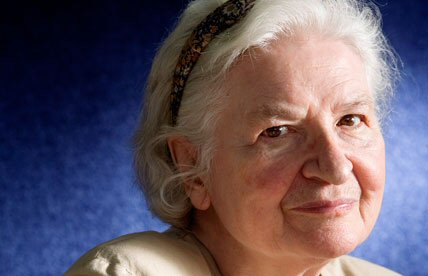
August 3, 1920
British mystery writer and
Conservative life peer in the House of Lords
“It was one of those perfect English autumnal days which occur more frequently in memory than in life.”
“What a child doesn't receive he can seldom later give.”
“In 1930s mysteries, all sorts of motives were credible which aren't credible today, especially motives of preventing guilty sexual secrets from coming out. Nowadays, people sell their guilty sexual secrets.”
“Human kindness is like a defective tap, the first gush may be impressive but the stream soon dries up.”
“God gives every bird his worm, but He does not throw it into the nest.”
“What the detective story is about is not murder but the restoration of order.”
“There comes a time when every scientist, even God, has to write off an experiment.”
“We English are good at forgiving our enemies; it releases us from the obligation of liking our friends.”
“I believe that political correctness can be a form of linguistic fascism, and it sends shivers down the spine of my generation who went to war against fascism.”
“If our sex life were determined by our first youthful experiments, most of the world would be doomed to celibacy. In no area of human experience are human beings more convinced that something better can be had only if they persevere.”
“Perhaps it's only when people are dead that we can safely show how much we cared about them. We know that it's too late then for them to do anything about it.”
“We can experience nothing but the present moment, live in no other second of time, and to understand this is as close as we can get to eternal life.”
“Write what you need to write, not what is currently popular or what you think will sell.”
“Open your mind to new experiences, particularly to the study of other people. Nothing that happens to a writer – however happy, however tragic – is ever wasted.”
“What do you mean by sound government?'
Good public order, no corruption in high places, freedom from fear and war and crime, a reasonably equitable distribution of wealth and resources, concern for the individual life.'
Then we haven't got sound government.”
“All fiction is largely autobiographical and much autobiography is, of course, fiction.”
“All Jane Austen novels have a common storyline: an attractive and virtuous young woman surmounts difficulties to achieve marriage to the man of her choice. This is the age-long convention of the romantic novel, but with Jane Austen, what we have is Mills & Boon written by a genius.”
“Learn to write by doing it. Read widely and wisely. Increase your word power. Find your own individual voice though practicing constantly. Go through the world with your eyes and ears open and learn to express that experience in words.”
“The secret of contentment is never to allow yourself to want anything which reason tells you you haven't a chance of getting.”
“Bad writing is contagious.”
“All the motives for murder are covered by four Ls: Love, Lust, Lucre and Loathing.”
“What mattered at fifty-eight was what had mattered at eighteen: breeding and good bone structure.”
“What a child doesn't receive he can seldom later give.”
“In 1930s mysteries, all sorts of motives were credible which aren't credible today, especially motives of preventing guilty sexual secrets from coming out. Nowadays, people sell their guilty sexual secrets.”
“Human kindness is like a defective tap, the first gush may be impressive but the stream soon dries up.”
“God gives every bird his worm, but He does not throw it into the nest.”
“What the detective story is about is not murder but the restoration of order.”
“There comes a time when every scientist, even God, has to write off an experiment.”
“We English are good at forgiving our enemies; it releases us from the obligation of liking our friends.”
“I believe that political correctness can be a form of linguistic fascism, and it sends shivers down the spine of my generation who went to war against fascism.”
“If our sex life were determined by our first youthful experiments, most of the world would be doomed to celibacy. In no area of human experience are human beings more convinced that something better can be had only if they persevere.”
“Perhaps it's only when people are dead that we can safely show how much we cared about them. We know that it's too late then for them to do anything about it.”
“We can experience nothing but the present moment, live in no other second of time, and to understand this is as close as we can get to eternal life.”
“Write what you need to write, not what is currently popular or what you think will sell.”
“Open your mind to new experiences, particularly to the study of other people. Nothing that happens to a writer – however happy, however tragic – is ever wasted.”
“What do you mean by sound government?'
Good public order, no corruption in high places, freedom from fear and war and crime, a reasonably equitable distribution of wealth and resources, concern for the individual life.'
Then we haven't got sound government.”
“All fiction is largely autobiographical and much autobiography is, of course, fiction.”
“All Jane Austen novels have a common storyline: an attractive and virtuous young woman surmounts difficulties to achieve marriage to the man of her choice. This is the age-long convention of the romantic novel, but with Jane Austen, what we have is Mills & Boon written by a genius.”
“Learn to write by doing it. Read widely and wisely. Increase your word power. Find your own individual voice though practicing constantly. Go through the world with your eyes and ears open and learn to express that experience in words.”
“The secret of contentment is never to allow yourself to want anything which reason tells you you haven't a chance of getting.”
“Bad writing is contagious.”
“All the motives for murder are covered by four Ls: Love, Lust, Lucre and Loathing.”
“What mattered at fifty-eight was what had mattered at eighteen: breeding and good bone structure.”
~

August 8 -
Author Marjorie Kinnan Rawlings
(1896 - 1953)
“A woman has got to love a bad man once or twice in her life, to be thankful for a good one.”
“We cannot live without the Earth or apart from it, and something is shrivelled in a man's heart when he turns away from it and concerns himself only with the affairs of men.” ― Cross Creek“Madness is only a variety of mental nonconformity and we are all individualists here.” ― Cross Creek“Somewhere beyond the sink-hole, past the magnolia, under the live oaks, a boy and a yearling ran side by side, and were gone forever.” ― The Yearling“Good" is what helps us or at least does not hinder. "Evil" is whatever harms us or interferes with us, according to our own selfish standards.” ― Cross Creek“Who owns Cross Creek? The red-birds, I think, more than I, for they will have their nests even in the face of delinquent mortgages..It seems to me that the earth may be borrowed, but not bought. It may be used, but not owned. It gives itself in response to love and tending, offers its seasonal flowering and fruiting. But we are tenants and not possessors, lovers, and not masters. Cross Creek belongs to the wind and the rain, to the sun and the seasons, to the cosmic secrecy of seed, and beyond all, to time...” ― Cross Creek“We were bred of earth before we were bred of our mothers. Once born, we can live without mother or father, or any other kin, or any friend, or any human love. We cannot live without the earth or apart from it, and something is shriveled in a man's heart when he turns away from it and concerns himself only with the affairs of men.” ― Cross Creek“Now he understood. This was death. Death was a silence that gave back no answer.” ― The Yearling“This, then, was hunger. This was what his mother had meant when she had said, “We'll all go hongry.” He had laughed, for he had thought he had known hunger, and it was faintly pleasant. He knew now that it had been only appetite. This was another thing.” ― The Yearling
“We cannot live without the Earth or apart from it, and something is shrivelled in a man's heart when he turns away from it and concerns himself only with the affairs of men.” ― Cross Creek“Madness is only a variety of mental nonconformity and we are all individualists here.” ― Cross Creek“Somewhere beyond the sink-hole, past the magnolia, under the live oaks, a boy and a yearling ran side by side, and were gone forever.” ― The Yearling“Good" is what helps us or at least does not hinder. "Evil" is whatever harms us or interferes with us, according to our own selfish standards.” ― Cross Creek“Who owns Cross Creek? The red-birds, I think, more than I, for they will have their nests even in the face of delinquent mortgages..It seems to me that the earth may be borrowed, but not bought. It may be used, but not owned. It gives itself in response to love and tending, offers its seasonal flowering and fruiting. But we are tenants and not possessors, lovers, and not masters. Cross Creek belongs to the wind and the rain, to the sun and the seasons, to the cosmic secrecy of seed, and beyond all, to time...” ― Cross Creek“We were bred of earth before we were bred of our mothers. Once born, we can live without mother or father, or any other kin, or any friend, or any human love. We cannot live without the earth or apart from it, and something is shriveled in a man's heart when he turns away from it and concerns himself only with the affairs of men.” ― Cross Creek“Now he understood. This was death. Death was a silence that gave back no answer.” ― The Yearling“This, then, was hunger. This was what his mother had meant when she had said, “We'll all go hongry.” He had laughed, for he had thought he had known hunger, and it was faintly pleasant. He knew now that it had been only appetite. This was another thing.” ― The Yearling
~

August 8 -
U.S. poet Sara Teasdale
(1884 - 1933)
“I found more joy in sorrow than you could find in joy.”
“Of my own spirit let me be in sole though feeble mastery.”
“Wisdom is not acquired save as the result of investigation.”
“It is strange how often a heart must be broken before the years can make it wise.”
“Though I know he loves me, tonight my heart is sad; his kiss was not so wonderful as all the dreams I had.”
“A hush is over everything, Silent as women wait for love; The world is waiting for the spring.”
“Life is but thought.”
“I make the most of all that comes and the least of all that goes.”
“When I can look life in the eyes, grown calm and very coldly wise, life will have given me the truth, and taken in exchange - my youth.”
“Life has loveliness to sell, all beautiful and splendid things, blue waves whitened on a cliff, soaring fire that sways and sings, and children's faces looking up, holding wonder like a cup.”
“I have no riches but my thoughts. Yet these are wealth enough for me.”
“Call him wise whose actions, words, and steps are all a clear because to a clear why.”
“No one worth possessing can be quite possessed.”
“There's nothing half so real in life as the things you've done... inexorably, unalterably done.”
“Oh who can tell the range of joy or set the bounds of beauty?”
“Beauty, more than bitterness, makes the heart break.”
“look for a lovely thing and you will find it, it is not far, it never will be far”
“Child, child, love while you can
The voice and the eyes and the soul of a man;
Never fear though it break your heart-
Out of the wound new joy will start;
Only love proudly and gladly and well,
Though love be heaven or love be hell.
Child, child, love while you may,
For life is short as a happy day;
Never fear the thing you feel-
Only by love is life made real;
Love, for the deadly sins are seven,
Only through love will you enter heaven.”
“Of my own spirit let me be in sole though feeble mastery.”
“Wisdom is not acquired save as the result of investigation.”
“It is strange how often a heart must be broken before the years can make it wise.”
“Though I know he loves me, tonight my heart is sad; his kiss was not so wonderful as all the dreams I had.”
“A hush is over everything, Silent as women wait for love; The world is waiting for the spring.”
“Life is but thought.”
“I make the most of all that comes and the least of all that goes.”
“When I can look life in the eyes, grown calm and very coldly wise, life will have given me the truth, and taken in exchange - my youth.”
“Life has loveliness to sell, all beautiful and splendid things, blue waves whitened on a cliff, soaring fire that sways and sings, and children's faces looking up, holding wonder like a cup.”
“I have no riches but my thoughts. Yet these are wealth enough for me.”
“Call him wise whose actions, words, and steps are all a clear because to a clear why.”
“No one worth possessing can be quite possessed.”
“There's nothing half so real in life as the things you've done... inexorably, unalterably done.”
“Oh who can tell the range of joy or set the bounds of beauty?”
“Beauty, more than bitterness, makes the heart break.”
“look for a lovely thing and you will find it, it is not far, it never will be far”
“Child, child, love while you can
The voice and the eyes and the soul of a man;
Never fear though it break your heart-
Out of the wound new joy will start;
Only love proudly and gladly and well,
Though love be heaven or love be hell.
Child, child, love while you may,
For life is short as a happy day;
Never fear the thing you feel-
Only by love is life made real;
Love, for the deadly sins are seven,
Only through love will you enter heaven.”
~

August 12 -
the author of America the Beautiful
Katharine Lee Bates (1859 - 1929)
- O beautiful for spacious skies,
- For amber waves of grain,
- For purple mountain majesties
- Above the fruited plain!
- America! America!
- God shed His grace on thee,
- And crown thy good with brotherhood
- From sea to shining sea!
~

August 12 -
U.S. mythology writer
Edith Hamilton
(1867 - 1963)
German-American educator and author who was“recognized as the greatest woman Classicist.” She was sixty-two years old when The Greek Way, her first book, was published in 1930. It was instantly successful, and is the earliest expression of her belief in "“the calm lucidity of the Greek mind” and “that the great thinkers of Athenswere unsurpassed in their mastery of truth and enlightenment.”
“Faith is not belief. Belief is passive. Faith is active.”
“A people's literature is the great textbook for real knowledge of them. The writings of the day show the quality of the people as no historical reconstruction can.”
“Civilization...is a matter of imponderables, of delight in the thins of the mind, of love of beauty, of honor, grace, courtesy, delicate feeling. Where imponderables, are things of first importance, there is the height of civilization, and, if at the same time, the power of art exists unimpaired, human life has reached a level seldom attained and very seldom surpassed.”
“There are few efforts more conducive to humility than that of the translator trying to communicate an incommunicable beauty. Yet, unless we do try, something unique and never surpassed will cease to exist except in the libraries of a few inquisitive book lovers.”
“To be able to be caught up into the world of thought-that is educated.”
“Theories that go counter to the facts of human nature are foredoomed.”
“When the freedom they wished for most was freedom from responsibility, then Athens ceased to be free and was never free again.”
“When the mind withdraws into itself and dispenses with facts it makes only chaos.”
“None but a poet can write a tragedy. For tragedy is nothing less than pain transmuted into exaltation by the alchemy of poetry.”
“Great art is the expression of a solution of the conflict between the demands of the world without and that within.”
“A people's literature is the great textbook for real knowledge of them. The writings of the day show the quality of the people as no historical reconstruction can.”
“Civilization...is a matter of imponderables, of delight in the thins of the mind, of love of beauty, of honor, grace, courtesy, delicate feeling. Where imponderables, are things of first importance, there is the height of civilization, and, if at the same time, the power of art exists unimpaired, human life has reached a level seldom attained and very seldom surpassed.”
“There are few efforts more conducive to humility than that of the translator trying to communicate an incommunicable beauty. Yet, unless we do try, something unique and never surpassed will cease to exist except in the libraries of a few inquisitive book lovers.”
“To be able to be caught up into the world of thought-that is educated.”
“Theories that go counter to the facts of human nature are foredoomed.”
“When the freedom they wished for most was freedom from responsibility, then Athens ceased to be free and was never free again.”
“When the mind withdraws into itself and dispenses with facts it makes only chaos.”
“None but a poet can write a tragedy. For tragedy is nothing less than pain transmuted into exaltation by the alchemy of poetry.”
“Great art is the expression of a solution of the conflict between the demands of the world without and that within.”
~

August 12 -
U.S. mystery writer
Mary Roberts Rinehart
(1876 – 1958)
author of The Circular Staircase
“To be kind to all, to like many and love a few, to be needed and wanted by those we love, is certainly the nearest we can come to happiness.”
“The world doesn't come to the clever folks, it comes to the stubborn, obstinate, one-idea-at-a-time people.”
“Love is like the measles. The older you get it, the worse the attack.”
“A little work, a little sleep, a little love and it's all over.”
“I never saw a lawyer yet who would admit he was making money.”
“Women are like dogs really. They love like dogs, a little insistently. And they like to fetch and carry and come back wistfully after hard words, and learn rather easily to carry a basket.”
“I hate those men who would send into war youth to fight and die for them; the pride and cowardice of those old men, making their wars that boys must die.”
“The writing career is not a romantic one. The writer's life may be colorful, but his work itself is rather drab.”
~

August 12
Zerna Sharp (1889 - 1981)
born in Indiana and the creator of
the Dick and Jane readers for children
~

August 15 -
Writer Edna Ferber
(1887 - 1968)
Novelist and playwright Edna Ferber began her writing career as a reporter in her native Michigan. She soon started to write fiction, and in 1924, she won the Pulitzer Prize for her novel So Big. Ferber was very popular––her book Show Boat (1926) became a musical, and Giant (1952) was made into a movie (James Dean's final film). Her plays include Dinner at Eight and Stage Door.
“Only amateurs say that they write for their own amusement. Writing is not an amusing occupation. It is a combination of ditch-digging, mountain-climbing, treadmill and childbirth. Writing may be interesting, absorbing, exhilarating, racking, relieving. But amusing? Never! ”
“Being an old maid is like death by drowning, a really delightful sensation after you cease to struggle.”
“I never go to weddings. Waste of time. Person can get married a dozen times. Lots of folks do. Family like ours, know everybody in the state of Texas and around outside, why, you could spend your life going to weddings. But a funeral, that's different. You only die once.” - Giant
“Perhaps too much of everything is as bad as too little.”
“Life can't ever really defeat a writer who is in love with writing, for life itself is a writer's lover until death – fascinating, cruel, lavish, warm, cold, treacherous, constant.”
“Big doesn't necessarily mean better. Sunflowers aren't better than violets.”
“Whoever said love conquers all was a fool. Because almost everything conquers love - or tries to.” ― Giant
“But always, to her, red and green cabbages were to be jade and burgundy, chrysoprase and prophyry. Life has no weapons against a woman like that.” ― So Big
“If it's freedom you want, come to Texas. No one there tells you what to do and how you have to do it.” ― Giant
“Any piece of furniture, I don't care how beautiful it is, has got to be lived with, and kicked about, and rubbed down, and mistreated..., and repolished, and knocked around and dusted and sat on or slept in or eaten off of before it develops its real character," Selina said.” ― So Big
“Some day I'll probably marry a horny-handed son of a toil, and if I do it'll be the horny hands that will win me. If you want to know, I like 'em with their scars on them. There's something about a man who has fought for it - I don't know what it is - a look in his eye - the feel of his hand. He needn't have been successful - thought he probably would be. I don't know. I'm not very good at this analysis stuff. I know he - well, you haven't a mark on you. Not a mark. You quit being an architect, or whatever it was, because architecture was an uphill disheartening job at the time. I don't say that you should have kept on. For all I know you were a bum architect. But if you had kept on - if you had loved it enough to keep on - fighting, and struggling, and sitcking it out - why, that fight would show in your face to-day - in your eyes and your jaw and your hands and in your way of standing and walking and sitting and talking. Listen. I'm not critcizing you. But you're all smooth. I like 'em bumpy.” ― So Big
“For equipment she had youth, curiosity, a steel strong frame...four hundred ninety-seven dollars; and a gay adventuresome spirit that was never to die, though it led her into curious places and she often found, at the end, only a trackless waste from which she had to retrace her steps, painfully. But always, to her, red and green cabbages were to be jade and Burgundy, crysoprase and porphyry. Life has no weapons against a woman like that.” ― So Big
“Life cannot defeat a writer who is in love with writing - for life itself is a writer's love until death.”
“He sat looking down at his hands--his fine strong unscarred hands. Suddenly and unreasonably he thought of another pair of hands--his mother's--with the knuckles enlarged, the skin broken--expressive--her life written on them. Scars. She had them.” ― So Big
“Many earnest young writers with a flow of adjectives and a passion for detail have attempted to describe the quiet of a great city at night, when a few million people within it are sleeping, or ought to be. They work in the clang of a distant owl car, and the roar of an occasional "L" train, and the hollow echo of the footsteps of the late passer-by. They go elaborately into description, and are strong on the brooding hush, but the thing has never been done satisfactorily.” ― Buttered Side Down: Stories
“Being an old maid is like death by drowning, a really delightful sensation after you cease to struggle.”
“I never go to weddings. Waste of time. Person can get married a dozen times. Lots of folks do. Family like ours, know everybody in the state of Texas and around outside, why, you could spend your life going to weddings. But a funeral, that's different. You only die once.” - Giant
“Perhaps too much of everything is as bad as too little.”
“Life can't ever really defeat a writer who is in love with writing, for life itself is a writer's lover until death – fascinating, cruel, lavish, warm, cold, treacherous, constant.”
“Big doesn't necessarily mean better. Sunflowers aren't better than violets.”
“Whoever said love conquers all was a fool. Because almost everything conquers love - or tries to.” ― Giant
“But always, to her, red and green cabbages were to be jade and burgundy, chrysoprase and prophyry. Life has no weapons against a woman like that.” ― So Big
“If it's freedom you want, come to Texas. No one there tells you what to do and how you have to do it.” ― Giant
“Any piece of furniture, I don't care how beautiful it is, has got to be lived with, and kicked about, and rubbed down, and mistreated..., and repolished, and knocked around and dusted and sat on or slept in or eaten off of before it develops its real character," Selina said.” ― So Big
“Some day I'll probably marry a horny-handed son of a toil, and if I do it'll be the horny hands that will win me. If you want to know, I like 'em with their scars on them. There's something about a man who has fought for it - I don't know what it is - a look in his eye - the feel of his hand. He needn't have been successful - thought he probably would be. I don't know. I'm not very good at this analysis stuff. I know he - well, you haven't a mark on you. Not a mark. You quit being an architect, or whatever it was, because architecture was an uphill disheartening job at the time. I don't say that you should have kept on. For all I know you were a bum architect. But if you had kept on - if you had loved it enough to keep on - fighting, and struggling, and sitcking it out - why, that fight would show in your face to-day - in your eyes and your jaw and your hands and in your way of standing and walking and sitting and talking. Listen. I'm not critcizing you. But you're all smooth. I like 'em bumpy.” ― So Big
“For equipment she had youth, curiosity, a steel strong frame...four hundred ninety-seven dollars; and a gay adventuresome spirit that was never to die, though it led her into curious places and she often found, at the end, only a trackless waste from which she had to retrace her steps, painfully. But always, to her, red and green cabbages were to be jade and Burgundy, crysoprase and porphyry. Life has no weapons against a woman like that.” ― So Big
“Life cannot defeat a writer who is in love with writing - for life itself is a writer's love until death.”
“He sat looking down at his hands--his fine strong unscarred hands. Suddenly and unreasonably he thought of another pair of hands--his mother's--with the knuckles enlarged, the skin broken--expressive--her life written on them. Scars. She had them.” ― So Big
“Many earnest young writers with a flow of adjectives and a passion for detail have attempted to describe the quiet of a great city at night, when a few million people within it are sleeping, or ought to be. They work in the clang of a distant owl car, and the roar of an occasional "L" train, and the hollow echo of the footsteps of the late passer-by. They go elaborately into description, and are strong on the brooding hush, but the thing has never been done satisfactorily.” ― Buttered Side Down: Stories
~

August 19 -
British children's writer
Edith Nesbit (1858 - 1924 )
“This is why I shall not tell you in this story about all the days when nothing happened. You will not catch me saying, 'thus the sad days passed slowly by'--or 'the years rolled on their weary course'--or 'time went on'--because it is silly; of course time goes on--whether you say so or not. So I shall just tell you the nice, interesting parts--and in between you will understand that we had our meals and got up and went to bed, and dull things like that.” ― The Story of the Treasure Seekers
“When you are young so many things are difficult to believe, and yet the dullest people will tell you that they are true--such things, for instance, as that the earth goes round the sun, and that it is not flat but round. But the things that seem really likely, like fairy-tales and magic, are, so say the grown-ups, not true at all. Yet they are so easy to believe, especially when you see them happening.”
“There is nothing more luxurious than eating while you read - unless it be reading while you eat. Amabel did both: they are not the same thing, as you will see if you think the matter over.”
“...Albert-next-door doesn't care for reading, and he has not read nearly so many books as we have, so he is very foolish and ignorant, but it cannot be helped... Besides, it is wrong to be angry with people for not being so clever as you are yourself.” ― The Story of the Treasure Seekers
“Ladylike is the beastliest word there is, I think. If a girl isn't a lady, it isn't worth while to be only like one, she'd better let it alone and be a free and happy bounder.” ― The New Treasure Seekers
“Time is but a mode of thought.”
“It is all very wonderful and mysterious, as all life is apt to be if you go a little below the crust, and are not content just to read newspapers and go by the Tube Railway, and buy your clothes ready-made, and think nothing can be true unless it is uninteresting.” ― The House of Arden
“They call it love," said Vernon. "I don't know what they mean by it. What do you mean [by love]?"
"I don't exactly know," said Temple slowly. "I suppose it's wanting to be with a person, and thinking about nothing else. And thinking they're the most beautiful and all that. And going over everything that they've ever said to you, and wanting— Well, I suppose if it's really love you want to marry them.”
― The Incomplete Amorist
“everything has an end, and you get to it if you only keep all on.” ― The Railway Children
“There is no bond like having read and like the same books.” ― Der verzauberte Garten / The wonderful garden
“When you are young so many things are difficult to believe, and yet the dullest people will tell you that they are true--such things, for instance, as that the earth goes round the sun, and that it is not flat but round. But the things that seem really likely, like fairy-tales and magic, are, so say the grown-ups, not true at all. Yet they are so easy to believe, especially when you see them happening.”
“There is nothing more luxurious than eating while you read - unless it be reading while you eat. Amabel did both: they are not the same thing, as you will see if you think the matter over.”
“...Albert-next-door doesn't care for reading, and he has not read nearly so many books as we have, so he is very foolish and ignorant, but it cannot be helped... Besides, it is wrong to be angry with people for not being so clever as you are yourself.” ― The Story of the Treasure Seekers
“Ladylike is the beastliest word there is, I think. If a girl isn't a lady, it isn't worth while to be only like one, she'd better let it alone and be a free and happy bounder.” ― The New Treasure Seekers
“Time is but a mode of thought.”
“It is all very wonderful and mysterious, as all life is apt to be if you go a little below the crust, and are not content just to read newspapers and go by the Tube Railway, and buy your clothes ready-made, and think nothing can be true unless it is uninteresting.” ― The House of Arden
“They call it love," said Vernon. "I don't know what they mean by it. What do you mean [by love]?"
"I don't exactly know," said Temple slowly. "I suppose it's wanting to be with a person, and thinking about nothing else. And thinking they're the most beautiful and all that. And going over everything that they've ever said to you, and wanting— Well, I suppose if it's really love you want to marry them.”
― The Incomplete Amorist
“everything has an end, and you get to it if you only keep all on.” ― The Railway Children
“There is no bond like having read and like the same books.” ― Der verzauberte Garten / The wonderful garden
~

August 22, 1935
Author Annie Proulx
“You know, one of the tragedies of real life is that there is no background music.”
“And it may be that love sometimes occurs without pain or misery.” ― The Shipping News
“You should write because you love the shape of stories and sentences and the creation of different words on a page. Writing comes from reading, and reading is the finest teacher of how to write.”
“There was some open space between what he knew and what he tried to believe, but nothing could be done about it, and if you can't fix it you've got to stand it.” ― Brokeback Mountain
“Everybody that went away suffered a broken heart. "I'm coming back some day," they all wrote. But never did. The old life was too small to fit anymore.” ― The Shipping News
“... there are four women in every man’s heart. The Maid in the Meadow, the Demon Lover, the Stouthearted Woman, the Tall and Quiet Woman.”
“Was love then like a bag of assorted sweets passed around from which one might choose more than once? Some might sting the tongue, some invoke night perfume. Some had centers as bitter as gall, some blended honey and poison, some were quickly swallowed. And among the common bull's-eyes and peppermints a few rare ones; one or two with deadly needles at the heart, another that brought clam and gentle pleasure. Were his fingers closing on that one?” ― The Shipping News
“We're all strange inside. We learn how to disguise our differences as we grow up.” ― The Shipping News
“What I find to be very bad advice is the snappy little sentence, 'Write what you know.' It is the most tiresome and stupid advice that could possibly be given. If we write simply about what we know we never grow. We don't develop any facility for languages, or an interest in others, or a desire to travel and explore and face experience head-on. We just coil tighter and tighter into our boring little selves. What one should write about is what interests one.”
“We face up to awful things because we can't go around them, or forget them. The sooner you say 'Yes, it happened, and there's nothing I can do about it,' the sooner you can get on with your own life. You've got children to bring up. So you've got to get over it. What we have to get over, somehow we do. Even the worst things.” ― The Shipping News
“I would rather be dead than not read.”
“All the travelin I ever done is going around the coffeepot looking for the handle.” ― Brokeback Mountain
“And it may be that love sometimes occurs without pain or misery.” ― The Shipping News
“You should write because you love the shape of stories and sentences and the creation of different words on a page. Writing comes from reading, and reading is the finest teacher of how to write.”
“There was some open space between what he knew and what he tried to believe, but nothing could be done about it, and if you can't fix it you've got to stand it.” ― Brokeback Mountain
“Everybody that went away suffered a broken heart. "I'm coming back some day," they all wrote. But never did. The old life was too small to fit anymore.” ― The Shipping News
“... there are four women in every man’s heart. The Maid in the Meadow, the Demon Lover, the Stouthearted Woman, the Tall and Quiet Woman.”
“Was love then like a bag of assorted sweets passed around from which one might choose more than once? Some might sting the tongue, some invoke night perfume. Some had centers as bitter as gall, some blended honey and poison, some were quickly swallowed. And among the common bull's-eyes and peppermints a few rare ones; one or two with deadly needles at the heart, another that brought clam and gentle pleasure. Were his fingers closing on that one?” ― The Shipping News
“We're all strange inside. We learn how to disguise our differences as we grow up.” ― The Shipping News
“What I find to be very bad advice is the snappy little sentence, 'Write what you know.' It is the most tiresome and stupid advice that could possibly be given. If we write simply about what we know we never grow. We don't develop any facility for languages, or an interest in others, or a desire to travel and explore and face experience head-on. We just coil tighter and tighter into our boring little selves. What one should write about is what interests one.”
“We face up to awful things because we can't go around them, or forget them. The sooner you say 'Yes, it happened, and there's nothing I can do about it,' the sooner you can get on with your own life. You've got children to bring up. So you've got to get over it. What we have to get over, somehow we do. Even the worst things.” ― The Shipping News
“I would rather be dead than not read.”
“All the travelin I ever done is going around the coffeepot looking for the handle.” ― Brokeback Mountain
~

August 22 -
Dorothy Parker
(1893 – 1967)
“I don’t care what is written about me so long as it isn’t true.”
“Wit has truth in it; wisecracking is simply calisthenics with words.”
“You can’t teach an old dogma new tricks.”
“I’m never going to accomplish anything; that’s perfectly clear to me. I’m never going to be famous. My name will never be writ large on the roster of Those Who Do Things. I don’t do anything. Not one single thing. I used to bite my nails, but I don’t even do that any more.”
“I might repeat to myself slowly and soothingly, a list of quotations beautiful from minds profound — if I can remember any of the damn things.”
“Four be the things I’d have been better without: Love, curiosity, freckles and doubt.”
“I require only three things of a man. He must be handsome, ruthless and stupid.”
“Take care of luxuries and the necessities will take care of themselves.”
“Money cannot buy health, but I’d settle for a diamond-studded wheelchair.”
“The two most beautiful words in the English language are ‘cheque enclosed.’”
“Wit has truth in it; wisecracking is simply calisthenics with words.”
“You can’t teach an old dogma new tricks.”
“I’m never going to accomplish anything; that’s perfectly clear to me. I’m never going to be famous. My name will never be writ large on the roster of Those Who Do Things. I don’t do anything. Not one single thing. I used to bite my nails, but I don’t even do that any more.”
“I might repeat to myself slowly and soothingly, a list of quotations beautiful from minds profound — if I can remember any of the damn things.”
“Four be the things I’d have been better without: Love, curiosity, freckles and doubt.”
“I require only three things of a man. He must be handsome, ruthless and stupid.”
“Take care of luxuries and the necessities will take care of themselves.”
“Money cannot buy health, but I’d settle for a diamond-studded wheelchair.”
“The two most beautiful words in the English language are ‘cheque enclosed.’”
~

August 23 –
Russian born American
Abstract Expressionist Sculptor
Louise Nevelson
(1899 – 1988)
“I never feel age ... If you have creative work, you don't have age or time.”
“A woman may not hit a ball stronger than a man, but it is different. I prize that difference.”
“The freer that women become, the freer men will be. Because when you enslave someone, you are enslaved.”
“I think most artists create out of despair. The very nature of creation is not a performing glory on the outside, it's a painful, difficult search within.”
“True strength is delicate.”
“What we call reality is an agreement that people have arrived at to make life more livable.”
“It is as hard to take success as it is failure.”
“From the first day in school until the day I graduated, everyone gave me one hundred plus in art. Well, where do you go in life? You go to the place where you got one hundred plus.”
“I see no reason why I should tickle stones or waste time on polishing bronze.”
“You must create your own world. I'm responsible for my world.”
“A woman may not hit a ball stronger than a man, but it is different. I prize that difference.”
“The freer that women become, the freer men will be. Because when you enslave someone, you are enslaved.”
“I think most artists create out of despair. The very nature of creation is not a performing glory on the outside, it's a painful, difficult search within.”
“True strength is delicate.”
“What we call reality is an agreement that people have arrived at to make life more livable.”
“It is as hard to take success as it is failure.”
“From the first day in school until the day I graduated, everyone gave me one hundred plus in art. Well, where do you go in life? You go to the place where you got one hundred plus.”
“I see no reason why I should tickle stones or waste time on polishing bronze.”
“You must create your own world. I'm responsible for my world.”
~

August 24, 1936 -
British Author A. S. Byatt
Dame Antonia Susan Duffy, DBE, known as A. S. Byatt, is an English novelist, poet and Booker Prize winner for her novel Possession. In 2008, The Times newspaper named her on its list of the 50 greatest British writers since 1945.
“There are things that happen and leave no discernible trace, are not spoken or written of, though it would be very wrong to say that subsequent events go on indifferently, all the same, as though such things had never been.”
“Vocabularies are crossing circles and loops. We are defined by the lines we choose to cross or to be confined by.”
“What literature can and should do is change the people who teach the people who don't read the books.”
“Art does not exist for politics, or for instruction- it exists primarily for pleasure, or it is nothing.”
“The individual appears for an instant, joins the community of thought, modifies it and dies; but the species, that dies not, reaps the fruit of his ephemeral existence.”
“…words have been all my life, all my life--this need is like the Spider's need who carries before her a huge Burden of Silk which she must spin out--the silk is her life, her home, her safety--her food and drink too--and if it is attacked or pulled down, why, what can she do but make more, spin afresh, design anew….”
― Possession
“I am a creature of my pen. My pen is the best of me.” ― Possession
“She didn't like to be talked about. Equally, she didn't like not to be talked about, when the high-minded chatter rushed on as though she was not there. There was no pleasing her, in fact. She had the grace, even at eleven, to know there was no pleasing her. She thought a lot, analytically, about other people's feelings, and had only just begun to realize that this was not usual, and not reciprocated.” ― The Children's Book
“An odd phrase, "by heart," he would add, as though poems were stored in the bloodstream.” ― Possession
“It is good for a man to invite his ghosts into his warm interior, out of the wild night, into the firelight, out of the howling dark.” ― The Biographer's Tale: A Novel
“Creative Writing was not a form of psychotherapy, in ways both sublime and ridiculuous, it clearly was, precisely that.”
“Try to avoid falseness and strain. Write what you really know about. Make it new. Don’t invent melodrama for the sake of it. Don’t try to run, let alone fly, before you can walk with ease.”
“He was beautiful, that was always affirmed, but his beauty was hard to fix or to see, for he was always glimmering, flickering, melting, mixing, he was the shape of a shapeless flame, he was the eddying thread of needle-shapes in the shapeless mass of the waterfall. He was the invisible wind that hurried the clouds in billows and ribbons. You could see a bare tree on the skyline bent by the wind, holding up twisted branches and bent twigs, and suddenly its formless form would resolve itself into that of the trickster.”
― Ragnorak: The End of the Gods
“History, writing, infect after a time a man's sense of himself...”
“You did not so much mind being -conventionally- betrayed, if you were not kept in the dark, which was humiliating, or defined only as a wife and dependent person, which was annihilating.” ― The Children's Book
“I worry about anthropomorphism as a form of self-deception. (The Christian religion is an anthropomorphic account of the universe.)”
“That is human nature, that people come after you, willingly enough, provided only that you no longer love or want them.” ― Possession
“Vocabularies are crossing circles and loops. We are defined by the lines we choose to cross or to be confined by.”
“What literature can and should do is change the people who teach the people who don't read the books.”
“Art does not exist for politics, or for instruction- it exists primarily for pleasure, or it is nothing.”
“The individual appears for an instant, joins the community of thought, modifies it and dies; but the species, that dies not, reaps the fruit of his ephemeral existence.”
“…words have been all my life, all my life--this need is like the Spider's need who carries before her a huge Burden of Silk which she must spin out--the silk is her life, her home, her safety--her food and drink too--and if it is attacked or pulled down, why, what can she do but make more, spin afresh, design anew….”
― Possession
“I am a creature of my pen. My pen is the best of me.” ― Possession
“She didn't like to be talked about. Equally, she didn't like not to be talked about, when the high-minded chatter rushed on as though she was not there. There was no pleasing her, in fact. She had the grace, even at eleven, to know there was no pleasing her. She thought a lot, analytically, about other people's feelings, and had only just begun to realize that this was not usual, and not reciprocated.” ― The Children's Book
“An odd phrase, "by heart," he would add, as though poems were stored in the bloodstream.” ― Possession
“It is good for a man to invite his ghosts into his warm interior, out of the wild night, into the firelight, out of the howling dark.” ― The Biographer's Tale: A Novel
“Creative Writing was not a form of psychotherapy, in ways both sublime and ridiculuous, it clearly was, precisely that.”
“Try to avoid falseness and strain. Write what you really know about. Make it new. Don’t invent melodrama for the sake of it. Don’t try to run, let alone fly, before you can walk with ease.”
“He was beautiful, that was always affirmed, but his beauty was hard to fix or to see, for he was always glimmering, flickering, melting, mixing, he was the shape of a shapeless flame, he was the eddying thread of needle-shapes in the shapeless mass of the waterfall. He was the invisible wind that hurried the clouds in billows and ribbons. You could see a bare tree on the skyline bent by the wind, holding up twisted branches and bent twigs, and suddenly its formless form would resolve itself into that of the trickster.”
― Ragnorak: The End of the Gods
“History, writing, infect after a time a man's sense of himself...”
“You did not so much mind being -conventionally- betrayed, if you were not kept in the dark, which was humiliating, or defined only as a wife and dependent person, which was annihilating.” ― The Children's Book
“I worry about anthropomorphism as a form of self-deception. (The Christian religion is an anthropomorphic account of the universe.)”
“That is human nature, that people come after you, willingly enough, provided only that you no longer love or want them.” ― Possession
~

August 27, 1932 -
mystery writer, historian, and biographer
Antonia Fraser
“Lives in previous centuries for women are largely a matter of class. It would have been fun to have been a rich, privileged woman in the 18th century, but no fun at all to be her maid.”
“After Mary Queen of Scots, I turned to the farthest subject possible: Cromwell.”
“We are privileged. There are poor people out there. We must to do something to make them privileged.”
“That is my major concern: writers who are in prison for writing.”
“People in my books tend to get their just deserts, even if not at the hands of the police.”
“My mother was a politician in my formative years.”
“As long as you persecute people, you will actually throw up terrorism.”

August 30 -
Author of Frankenstein
Mary Wollstonecraft Shelley
(1797 - 1851)
“I do not wish women to have power over men; but over themselves.”
“Teach him to think for himself? Oh, my God, teach him rather to think like other people!”
“But I am a blasted tree; the bolt has entered my soul; and I felt then that I should survive to exhibit what I shall soon cease to be - a miserable spectacle of wrecked humanity, pitiable to others and intolerable to myself.”
“Invention, it must be humbly admitted, does not consist in creating out of void, but out of chaos.”
“I am very averse to bringing myself forward in print, but as my account will only appear as an appendage to a former production, and as it will be confined to such topics as have connection with my authorship alone, I can hardly accuse myself of a personal intrusion.”
“It is justice, not charity, that is wanting in the world.”
“My dreams were all my own; I accounted for them to nobody; they were my refuge when annoyed - my dearest pleasure when free.”
“The same energy of character which renders a man a daring villain would have rendered him useful in society, had that society been well organized.”
“Teach him to think for himself? Oh, my God, teach him rather to think like other people!”
“But I am a blasted tree; the bolt has entered my soul; and I felt then that I should survive to exhibit what I shall soon cease to be - a miserable spectacle of wrecked humanity, pitiable to others and intolerable to myself.”
“Invention, it must be humbly admitted, does not consist in creating out of void, but out of chaos.”
“I am very averse to bringing myself forward in print, but as my account will only appear as an appendage to a former production, and as it will be confined to such topics as have connection with my authorship alone, I can hardly accuse myself of a personal intrusion.”
“It is justice, not charity, that is wanting in the world.”
“My dreams were all my own; I accounted for them to nobody; they were my refuge when annoyed - my dearest pleasure when free.”
“The same energy of character which renders a man a daring villain would have rendered him useful in society, had that society been well organized.”
~
September Birthdays
Joan Aiken
born September 4 , 1924
Joan Delano Aiken (1924 - 2004) was an English novelist. She was born in Rye, East Sussex, into a family of writers, including her father Conrad Aiken, who won the Pulitzer Prize for his poetry and her sister Jane Aiken Hodge. During her lifetime she published over one hundred books for children and adults, including the acclaimed Wolves of Willoughby Chase series. She received the Guardian Award (1969), the Edgar Allan Poe Award (1972) as well as an MBE from the Queen for her services to Children's Literature.

Why do we want to have alternate worlds? It’s a way of making progress. You have to imagine something before you do it. Therefore, if you write about something, hopefully you write about something that’s better or more interesting than circumstances as they now are, and that way you hope to make a step towards it.
Adult books tend to be for entertainment … whereas children, when they read, are reading to learn about life, unconsciously. Or they should be.
Details are vitally important in children’s fiction. Of course, children will read the bald kind of story, one that lacks detail, if it has plenty of action and keeps moving; but that is not the kind of story they go back to fondly again and again.
I remember my daughter once picking up a woman’s magazine and starting to read a serial in it; the story was laid in the south of France, and the heroine reported, “We went into the chateau and were served with wine and little cakes.” My daughter flung down the magazine in utter scorn, exclaiming, “What’s the use of that if she doesn’t tell you what sort of little cakes?”
Stories ought not to be just little bits of fantasy that are used to wile away an idle hour; from the beginning of the human race stories have been used - by priests, by bards, by medicine men - as magic instruments of healing, of teaching, as a means of helping people come to terms with the fact that they continually have to face insoluble problems and unbearable realities.

Night's winged horses
No one can outpace
But midnight is no moment
Midnight is a place.
Meet me at Midnight,
Among the Queen Anne's Lace
Midnight is not a moment,
Midnight is a place—
When, when shall I meet you
When shall I see your face
For I am living in time at present
But you are living in space.
Time is only a corner
Age is only a fold
A year is merely a penny
Spent from a century's gold.
So meet me, meet me at midnight
(With sixty seconds' grace)
Midnight is not a moment;
Midnight is a place.
~ Joan Aiken (Midnight is a Place)
~
Dame Edith Sitwell
born September 7, 1887

English poet and eccentric (1887-1964)
“A great many people now reading and writing would be better employed keeping rabbits.”
“Why not be oneself? That is the whole secret of a successful appearance. If one is a greyhound, why try to look like a Pekingese?”
“I am not eccentric. It's just that I am more alive than most people. I am an unpopular electric eel set in a pond of goldfish.”
“I have often wished I had time to cultivate modesty.... But I am too busy thinking about myself.”

“The trouble with most Englishwomen is that they will dress as if they had been a mouse in a previous incarnation they do not want to attract attention.”
“The public will believe anything, so long as it is not founded on truth.”
“My personal hobbies are reading, listening to music, and silence.”
“When we think of cruelty, we must try to remember the stupidity, the envy, the frustration from which it has arisen.”
“Vulgarity is, in reality, nothing but a modern, chic, pert descendant of the goddess Dullness.”

~
Dame Agatha Christie
born September 15, 1890

Queen of the British Cozy (1890-1976)
Curious things, habits. People themselves never knew they had them.
I like living. I have sometimes been wildly, despairingly, acutely miserable, racked with sorrow, but through it all I still know quite certainly that just to be alive is a grand thing.
Good advice is always certain to be ignored, but that's no reason not to give it.
The best time to plan a book is while you're doing the dishes.
An archaeologist is the best husband a woman can have. The older she gets the more interested he is in her.
I don't think necessity is the mother of invention - invention, in my opinion, arises directly from idleness, possibly also from laziness. To save oneself trouble.
One is left with the horrible feeling now that war settles nothing; that to win a war is as disastrous as to lose one.
I have enjoyed greatly the second blooming that comes when you finish the life of the emotions and of personal relations; and suddenly find - at the age of fifty, say - that a whole new life has opened before you, filled with things you can think about, study, or read about...It is as if a fresh sap of ideas and thoughts was rising in you.
Never do anything yourself that others can do for you.
A mother's love for her child is like nothing else in the world. It knows no law, no pity. It dares all things and crushes down remorselessly all that stands in its path.
It is a curious thought, but it is only when you see people looking ridiculous that you realize just how much you love them.

~
Fay Weldon
born September 22, 1933

British Comic Novelist
“guilt to motherhood is like grapes to wine”
One must be careful with words. Words turn probabilities into facts and by sheer force of definition translate tendencies into habits.
Nothing happens, and nothing happens, and then everything happens.
I am not cynical. I am just old. I know what is going to happen next. ~ Chalcot Crescent
To do good to one is to do bad to another. But you don't need to hear my excuses. They are the same that everyone makes to themselves when faced with the misery of others; though they would like to do the right thing, they simply fail to do so and look after themselves instead.
Truly Alice, books are wonderful things; to sit alone in a room and laugh and cry, because you are reading, and still be safe when you close the book; and having finished it, discover you are changed, yet unchanged! To be able to visit the City of Invention at will, depart at will – that is all, really, education is about, should be about. ~ Letters to Alice on First Reading Jane Austen

Beauty is the first present nature gives to women and the first it takes away.
I love acting. It is so much more real than life.
I love acting. It is so much more real than life.
We shelter children for a time; we live side by side with men; and that is all. We owe them nothing, and are owed nothing. I think we owe our friends more, especially our female friends.
Young women especially have something invested in being nice people, and it's only when you have children that you realise you're not a nice person at all, but generally a selfish bully.
The greatest things are accomplished by individual people, not by committees or companies.
Only one thing registers on the subconscious mind: repetitive application - practice. What you practice is what you manifest.
You end up as you deserve. In old age you must put up with the face, the friends, the health, and the children you have earned.
People give us credit only for what we ourselves believe.
~
Joan Jett
born September 22, 1958

American rock guitarist, singer, songwriter
Aggressive, tough and defiant may describe me, but that leaves the impression I'm mean and I'm not. People expect me to have fangs.
Girls have got balls. They're just a little higher up that's all.
I don't know if I miss it per se, but I do miss the fact that there just doesn't seem to be any rock 'n' roll out there anyplace. Everything does seem kind of tame. It's even hard in Manhattan to go out and find a good band to go see.
I figured out it was a social thing, what women were allowed to do. At a very young age, I decided I was not going to follow women's rules.
I grew up in a world that told girls they couldn't play rock 'n' roll.
I think I was born strong-willed. That's not the kind of thing you can learn. The advantage is, you stick to what you believe in and rarely get pushed out of what you want to do.
I think there's nothing better than seeing a three-chord straight up rock 'n' roll band in your face with sweaty music and three minute good songs.
I'd like to just be a little bit more open to making mistakes and not worrying about it so much.
I'm concentrating on staying healthy, having peace, being happy, remembering what is important, taking in nature and animals, spending time reading, trying to understand the universe, where science and the spiritual meet.
My guitar is not a thing. It is an extension of myself. It is who I am.
My parents taught me I could be anything in the world I wanted to be.
People don't want to see women doing things they don't think women should do.
Rock 'n' roll music is what gets me off.
Why there aren't people out there willing to have fun playing rock 'n' roll. I just don't get it.
You got nothing to lose. You don't lose when you lose fake friends.
You know I don't care if the world thinks I'm smart or not.
~
October Birthdays
Julie Andrews
born October 1, 1935
Dame Julia Elizabeth Andrews, DBE is an English film and stage actress, singer, and author. She is the recipient of a Golden Globe, an Emmy, a Grammy, BAFTA, People's Choice Award, Theatre World Award, Screen Actors Guild and Academy Award. Andrews rose to prominence starring in musicals such as My Fair Lady and Camelot, and in musical films such as Mary Poppins (1964), for which she won the Academy Award for Best Actress, and The Sound of Music (1965).
All love shifts and changes. I don't know if you can be wholeheartedly in love all the time.
I am a liberated woman. And I do believe if a woman does equal work she should be paid equal money. But personally I am feminine and I do like male authority to lean on.
I am very proud to be British. I'm very conscious of carrying my country with me wherever I go. I feel I need to represent it well.
I hate the word wholesome.
I have been called a nun with a switchblade where my privacy is concerned. I think there's a point where one says, that's for family, that's for me.
I've got a good right hook.If the director says you can do better, particularly in a love scene, then it is rather embarrassing.
On the whole, I think women wear too much and are to fussy. You can't see the person for all the clutter.
Perseverance is failing 19 times and succeeding the 20th.
Richard Burton rang me up once and said, Do you know you're my only leading lady I've never slept with? I said, Well, please don't tell everybody, it's the worst image.
(1982) Does Mary Poppins have an orgasm? Does she go to the bathroom? I assure you, she does.
(about whether Mary Poppins and Bert ever got it together) I hope so. She wouldn't admit it, but I do hope so.
Some people regard discipline as a chore. For me, it is a kind of order that sets me free to fly.
Sometimes I'm so sweet even I can't stand it.Sometimes opportunities float right past your nose. Work hard, apply yourself, and be ready. When an opportunity comes you can grab it.
~
Annie Leibovitz
born October 2, 1949

American portrait photographer best known for her portraits of the Rolling Stones on tour, and John Lennon, taken in December 1980, just five hours before he was shot and killed.
A thing that you see in my pictures is that I was not afraid to fall in love with these people.
A very subtle difference can make the picture or not.
At my Rolling Stones' tour, the camera was a protection. I used it in a Zen way.
Coming tight was boring to me, just the face... it didn't have enough information.
I am impressed with what happens when someone stays in the same place and you took the same picture over and over and it would be different, every single frame.
I didn't want to let women down. One of the stereotypes I see breaking is the idea of aging and older women not being beautiful.

I don't think there is anything wrong with white space. I don't think it's a problem to have a blank wall.
I still need the camera because it is the only reason anyone is talking to me.
I wish that all of nature's magnificence, the emotion of the land, the living energy of place could be photographed.
I'd like to think that the actions we take today will allow others in the future to discover the wonders of landscapes we helped protect but never had the chance to enjoy ourselves.
If I didn't have my camera to remind me constantly, I am here to do this, I would eventually have slipped away, I think. I would have forgotten my reason to exist.
If it makes you cry, it goes in the show.
Lennon was very helpful. What he taught me seems completely obvious: he expected people to treat each other well.
My hope is that we continue to nurture the places that we love, but that we also look outside our immediate worlds.
Nature is so powerful, so strong. Capturing its essence is not easy - your work becomes a dance with light and the weather. It takes you to a place within yourself.
No one ever thought Clint Eastwood was funny, but he was.
When you are younger, the camera is like a friend and you can go places and feel like you're with someone, like you have a companion.
You don't have to sort of enhance reality. There is nothing stranger than truth.
~
Anne Rice
born October 4, 1941
born October 4, 1941

Anne Rice (born Howard Allen Frances O'Brien) is a best-selling Southern American author of metaphysical gothic fiction, Christian literature and erotica from New Orleans, Louisiana. Her books have sold nearly 100 million copies, making her one of the most widely read authors in modern history.
Dickens is a very underrated writer at the moment. Everyone in his time admired him but I think right now he's not spoken of enough.
I can't get very far away from Christianity, I can't get very far away from the angels and the saints. I work them in always, in some way.
I claim Dickens as a mentor. He's my teacher. He's one of my driving forces.
I feel like an outsider, and I always will feel like one. I've always felt that I wasn't a member of any particular group.
I know nothing of God or the Devil. I have never seen a vision nor learned a secret that would damn or save my soul.
I loved words. I love to sing them and speak them and even now, I must admit, I have fallen into the joy of writing them.
I thought The Shining was just absolutely wonderful. Stephen King reaches all kinds of people. In the beginning he was just dismissed out of hand, which was terrible.
I want to love all the children of God - Christian, Jew, Moslem, Hindu, Buddhist - everyone. I want to love gay Christians and straight Christians.
I was obsessed with religious questions, the basics: Why are we here? Why is the world so beautiful?
I can't get very far away from Christianity, I can't get very far away from the angels and the saints. I work them in always, in some way.
I claim Dickens as a mentor. He's my teacher. He's one of my driving forces.
I feel like an outsider, and I always will feel like one. I've always felt that I wasn't a member of any particular group.
I know nothing of God or the Devil. I have never seen a vision nor learned a secret that would damn or save my soul.
I loved words. I love to sing them and speak them and even now, I must admit, I have fallen into the joy of writing them.
I thought The Shining was just absolutely wonderful. Stephen King reaches all kinds of people. In the beginning he was just dismissed out of hand, which was terrible.
I want to love all the children of God - Christian, Jew, Moslem, Hindu, Buddhist - everyone. I want to love gay Christians and straight Christians.
I was obsessed with religious questions, the basics: Why are we here? Why is the world so beautiful?
I'm always looking, and I'm always asking questions.
I'm fascinated by almost any mythology that I can get my hands on.
I'm going to keep on dealing with the supernatural in a lot of ways.
I'm usually working on my own mythology, my own realm of created characters. Stories in mythology inspire me, though I may not be conscious of it.
I'm fascinated by almost any mythology that I can get my hands on.
I'm going to keep on dealing with the supernatural in a lot of ways.
I'm usually working on my own mythology, my own realm of created characters. Stories in mythology inspire me, though I may not be conscious of it.

Obsession led me to write. It's been that way with every book I've ever written. I become completely consumed by a theme, by characters, by a desire to meet a challenge.
Obviously, a writer can't know everything about what she writes. It's impossible.
People who cease to believe in God or goodness altogether still believe in the devil. I don't know why. No, I do indeed know why. Evil is always possible. And goodness is eternally difficult.
Stephen King in many respects is a wonderful writer. He has made a contribution. People in the future will be able to pick up Stephen King's books and learn a lot about who we were by reading those books.
That process by which you become a writer is a pretty lonely one. We don't have a group apprenticeship like a violinist might training for an orchestra.
The thing should have plot and character, beginning, middle and end. Arouse pity and then have a catharsis. Those were the best principles I was ever taught.
The vampires have always been metaphors for me. They've always been vehicles through which I can express things I have felt very, very deeply.
Obviously, a writer can't know everything about what she writes. It's impossible.
People who cease to believe in God or goodness altogether still believe in the devil. I don't know why. No, I do indeed know why. Evil is always possible. And goodness is eternally difficult.
Stephen King in many respects is a wonderful writer. He has made a contribution. People in the future will be able to pick up Stephen King's books and learn a lot about who we were by reading those books.
That process by which you become a writer is a pretty lonely one. We don't have a group apprenticeship like a violinist might training for an orchestra.
The thing should have plot and character, beginning, middle and end. Arouse pity and then have a catharsis. Those were the best principles I was ever taught.
The vampires have always been metaphors for me. They've always been vehicles through which I can express things I have felt very, very deeply.
To write something, you have to risk making a fool of yourself.
Very few beings really seek knowledge in this world. Mortal or immortal, few really ASK. On the contrary, they try to wring from the unknown the answers they have already shaped in their own minds.
We're frightened of what makes us different.
When I write something, every word of it is meant. I can't say it enough.
Writers, as they gain success, feel like outsiders because writers don't come together in real groups.
You can look at the New York Times Bestseller List and you can be pretty sure that the writers on that list don't know each other very well.
You reach deep down and bring up what feels absolutely authentic to you as you move along with the book, but you don't know everything about it. You can't.
Very few beings really seek knowledge in this world. Mortal or immortal, few really ASK. On the contrary, they try to wring from the unknown the answers they have already shaped in their own minds.
We're frightened of what makes us different.
When I write something, every word of it is meant. I can't say it enough.
Writers, as they gain success, feel like outsiders because writers don't come together in real groups.
You can look at the New York Times Bestseller List and you can be pretty sure that the writers on that list don't know each other very well.
You reach deep down and bring up what feels absolutely authentic to you as you move along with the book, but you don't know everything about it. You can't.
Give me a man or woman who has read a thousand books and you give me an interesting companion. Give me a man or woman who has read perhaps three and you give me a very dangerous enemy indeed.
Ignore any loss of nerve, ignore and loss of self-confidence, ignore any doubt or confusion. Move on believing in love, in peace, and harmony, and in great accomplishment. Remember joy isn't a stranger to you. You are winning and you are strong. Love. Love first, love always, love forever.
~
Susan Sarandon
born October 4, 1946

Children reinvent your world for you.
Do you really have to be the ice queen intellectual or the slut whore? Isn't there some way to be both?
Everyone has a responsibility towards this larger family of man, but especially if you're privileged, that increases your responsibility.
I feel my family's needs are a priority. I'm not comfortable with the idea of serving the many and ignoring my family.
I look forward to being older, when what you look like becomes less and less an issue and what you are is the point.
I think I'm an actor because I have very strong imagination and empathy. I never studied acting, but those two qualities are exactly the qualities that make for an activist.
I think sometimes what happens is that all of this feeling out of control manifests itself in trying to control your body; whether it's an eating disorder or talking about getting your nose fixed, as if that's going to be the solution to all the pressure.
I try to live my life every day in the present, and try not to turn a blind eye to injustice and need.
I was told I had an overabundance of original sin.
I'm tired of being labelled anti-American because I ask questions.
If you walk down the street and see someone in a box, you have a choice. That person is either the other and you're fearful of them, or that person is an extension of your family. And that makes you at home in that world and not fearful. So really it's very self-serving.
In the U.S., they just want to know who you're sleeping with.
Everyone has a responsibility towards this larger family of man, but especially if you're privileged, that increases your responsibility.
I feel my family's needs are a priority. I'm not comfortable with the idea of serving the many and ignoring my family.
I look forward to being older, when what you look like becomes less and less an issue and what you are is the point.
I think I'm an actor because I have very strong imagination and empathy. I never studied acting, but those two qualities are exactly the qualities that make for an activist.
I think sometimes what happens is that all of this feeling out of control manifests itself in trying to control your body; whether it's an eating disorder or talking about getting your nose fixed, as if that's going to be the solution to all the pressure.
I try to live my life every day in the present, and try not to turn a blind eye to injustice and need.
I was told I had an overabundance of original sin.
I'm tired of being labelled anti-American because I ask questions.
If you walk down the street and see someone in a box, you have a choice. That person is either the other and you're fearful of them, or that person is an extension of your family. And that makes you at home in that world and not fearful. So really it's very self-serving.
In the U.S., they just want to know who you're sleeping with.

It is a different world than when I was growing up, and you started to just kind of maintain at thirty-five and just hope you can hope it together. People are a lot more vital than I am and doing all kinds of things and leading really important movements.
It will be great when it's not such a big deal when a woman gets a good job.
It's still not easy to find roles that offer more complex images of women.
Just because I haven't yet had any project surgery, I'm not going to knock it, because I think women have the right to do whatever they want to their bodies that make them feel good about themselves.
Making love is like hitting a baseball. You just gotta relax and concentrate.
It will be great when it's not such a big deal when a woman gets a good job.
It's still not easy to find roles that offer more complex images of women.
Just because I haven't yet had any project surgery, I'm not going to knock it, because I think women have the right to do whatever they want to their bodies that make them feel good about themselves.
Making love is like hitting a baseball. You just gotta relax and concentrate.
Before our kids start coming home from Iraq in body bags and women and children start dying in Baghdad, I need to know, what did Iraq do to us?
So I would hope they would develop some kind of habit that involves understanding that their life is so full they can afford to give in all kinds of ways to other people. I consider that to be baseline spirituality.
The only thing I can talk about is just forgiving yourself, because I do not have everything together. And so I tell people: No, you should see my house, it's a mess.
The only thing I can talk about is just forgiving yourself, because I do not have everything together. And so I tell people: No, you should see my house, it's a mess.
When you start to develop your powers of empathy and imagination, the whole world opens up to you.
~
Sigourney Weaver
born October 8, 1949

Sigourney Weaver is an American actress best known for her critically acclamaid role of Ellen Ripley in the four Alien films.
I don't really see science fiction as fiction. I can imagine colonies on Mars and everything.
Secretly, I had always wanted to go to Vegas, and have my own really bad act!
~
Helen Hayes
born October 10, 1900

Helen Hayes Brown (1900 – 1993) was an American actress whose career spanned almost 70 years. She eventually garnered the nickname "First Lady of the American Theatre" and was one of twelve people who have won an Emmy, a Grammy, an Oscar and a Tony Award.
Childhood is a short season.
If you rest, you rust.

The good die young but not always. The wicked prevail but not consistently. I am confused by life, and I feel safe within the confines of the theatre.
There's a little vanity chair that Charlie gave me the first Christmas we knew each other. I'll not be parting with that, nor our bed - the four-poster - I'll be needing that to die in.

~

